Front
,
Search
,
Index
,
Links
,
Pathology
,
Molecules
,
Syndromes
,
Muscle
,
NMJ
,
Nerve
,
Spinal
,
Ataxia
,
Antibody & Biopsy
,
Patient Info
INFECTIONS & MYELOPATHY
Abscess
AIDS
Central European encephalitis
CSF eosinophilia
HIV
HTLV I & II
Parasites
Poliomyelitis: Acute
Spirochete
Tuberculosis
Varicella zoster
West Nile
Whipple's
Neuromuscular Disorders
Tabes dorsalis
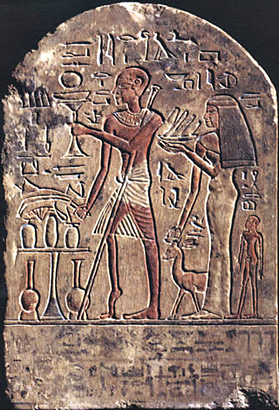
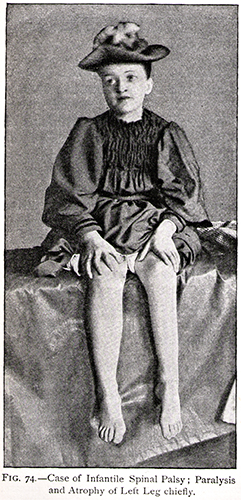
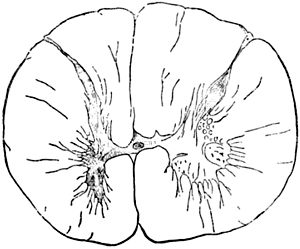
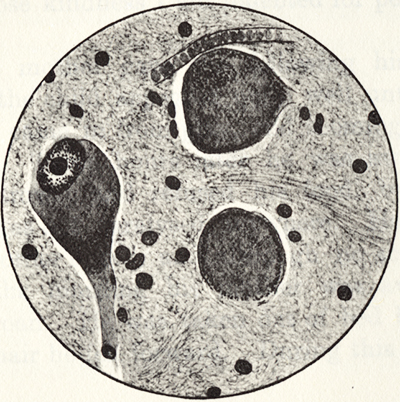
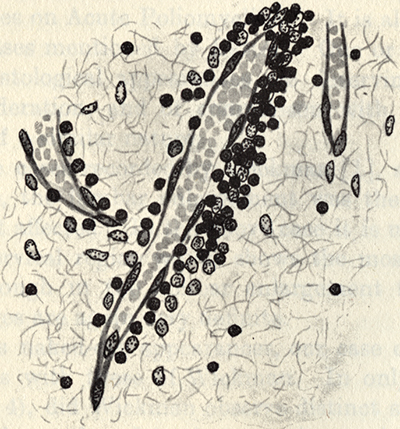
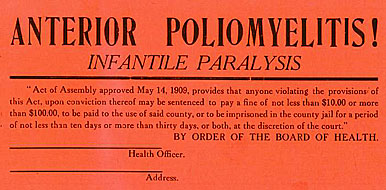
Polio
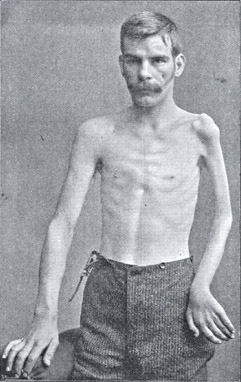
From Bramwell: Atlas of Clinical Medicine
Polio: Arm atrophy
Human susceptibility: 2° to Polio virus receptor
Events after viral exposure
Asymptomatic: 90% to 95%
Minor illness: 1 to 5 days after exposure
Fever
Malaise, Myalgia
Sore throat, GI upset
Major illness: 4 to 10 days
Aseptic meningitis
Fever
Pain: Headache, stiff neck, back pain
Paralytic disease: 50% of those with major illness
After 2 to 5 days of illness
Fasciculations: Localized
Pain: Intense myalgia, hyperesthesia
Weakness
Onset: Fulminent, Acute, or Subacute
Focal or Asymmetric
Legs > Arms > Bulbar (20%)
Acute dysautonomia
Blood pressure instability
Cardiac arrhythmia
GI: Atony, Constipation
Urinary retention
Sweating: Increased or Decreased
Differential diagnosis
Viral: Anterior horn cell disease
Enterovirus 71
Coxsackie A & B
Echoviruses
West Nile
Immune:
Acute neuropathies
Porphyria
Toxins
Myelitis
Lab
CSF pleocytosis: Acute - Polys; > 72 hours - lymphocytes
Serology: Serum 4-fold rise; CSF IgM poliovirus specific
Culture: Stool positive in 90% by 20 days
Electrodiagnostic: Selective loss of motor axons @ 7 to 10 days
Also see
Post-polio syndrome
External links:
Polio virus image
;
PBS
Other Viruses
Varicella zoster
Transverse myelitis
Acquired Immunodeficiency Syndrome (AIDS)
R. Schmidt
HIV myelopathy
Cytomegalovirus
Lumbosacral polyradiculopathy
HIV: Chronic myelopathy
Frequency: 5% to 20% of late stage AIDS
Onset: Late stages of AIDS
Clinical
Weakness: Legs; Symmetric or asymmetic
Pyramidal signs: Leg spasticity
Urinary frequency/incontinence: May be presenting feature
Sensory loss: Mild
Associated CNS features: Dementia
Course: Progressive
Pathology
Vacuolar
Prominent posterior column involvement
Human T-cell lymphotrophic virus, Type I (HTLV I)
3
Epidemiology
Common in West Indies (Caribbean basin), Japan, Centrla Africa, Iranian Jews
US risk groups
Intravenous drug abusers
Immigrants from high-risk areas
Often associated with coinfection with HTLV-II or HIV
Endemic in certain parts of the southeastern US (Native Amerindian population)
Myelopathy in 1% of patients with infection
Most infected patients are asymptomatic
Transmission
Vertical transmission: Mother to child
Through breast-feeding: Especially past 6th month
Related to: High maternal provirus levels & High HTLV-I antibody titer
Sexual
More common male to female
Inefficient
Parenteral: Via lymphocytes
Blood
Organ transplantation
Clinical
Myelopathy: Progressive spastic paraparesis
Nosology
Tropical spastic paraparesis
HTLV-1-associated myelopathy (HAM)
Onset
Age: 3rd to 5th decade
20 to 30 years after initial infection
Abnormal gait
Slow development: Usual pattern; Over years
Rapid development: Reported after blood transfusion or organ transplantation
Clinical
Motor: Leg weakness
Pyramidal signs
Arms & Legs
Hyperreflexia
Spasticity
Symmetric
Autonomic: Urinary & fecal incontinence
Sensory: Minor changes
Other occasional neural features
Optic atrophy
Sensorineural hearing loss
Cerebellar symptoms
Cognitive deficits
Pathology
Chronic inflammation: Middle to lower thoracic cord
Spinal cord atrophy: Involvement of pyramidal tracts & posterior columns
Meningeal thickening
Motor disorder: "ALS-like syndrome"; Often atypical features
Epidemiology: Described in few patients
Clinical: Variable syndromes
Pyramidal features
Lower motor neuron
Weakness: Often proximal
Muscle wasting
Fasciculations
Urinary incontinence
Pathology: Anterior gray horn of spinal cord; Ventral spinal nerve roots
EMG: Denervation, acute & chronic, in lower thoracic paraspinal muscles
Polyneuropathy
3
Frequency
Clinical: 1% to 6% of infected patients; ? More with associated myelopathy
Electrophysiological findings: Up to 40% to 50%
Clinical
Sensory loss: Distal legs
Tendon reflexes: Less at ankles than at knees
May occur in absence of myelopathy
Treatment: Reports of improvement when inflammation found on biopsy
NCV: Axon loss
Normal velocities
Mildly reduced SNAP amplitudes in legs
Pathology
Reduced density of large and small myelinated axons
Regenerating clusters
Inflammation: Perivascular; CD4 & CD8 cells
CSF: High protein; Pleocytosis
Myopathy
Inclusion body myopathy
Weakness: Proximal
Course: Slowly progressive
Serum CK: Mildly elevated
Muscle biopsy: Myopathy; Vacuoles; Endomysial inflammation
Inflammatory myopathy
Variable association with HTLV-1 infection
Occcasional patients: Asymmetric proximal weakness
Serum CK: May be high
Treatment: Reports of improvement with corticosteroids
HAM/TSP patients: Inflammation in muscle may be found
Other syndromes with HTLV-1 infection
Sjögren's syndrome
T-cell leukemia: Adult
Uveitis
Arthropathy & synovitis
Pulmonary abnormalities
Thyroiditis
Laboratory
CSF: Mild increase in protein & cells; High IgG
MRI
Spinal cord: Increased T2 signal; Cord atrophy
Subcortical: Leukoencephalopathy
False positive: Lyme; Syphilis; Antiphospholipid antibody
Possible treatments
Methylprednisolone, IV
Interferon-alpha
1
Human T-cell lymphotrophic virus, Type II
2
African-American, often Indian descent
Onset: 34 to 70 years
Clinical
Most patients asymptomatic
Spastic paraparesis or quadriparesis
Spinal sensory loss
Progressive
Non-ambulatory in < 5 years
Faster than HTLV I
CSF: ± high protein, ± oligoclonal bands
Spirochetes
Syphilis
Meningovascular
Arachnoiditis
Tabes dorsalis
Lyme
Spastic paraparasis
Bladder dysfunction
Tuberculosis
Arachnoiditis & meningitis
Often progresses to complete block
Very high CSF protein
Tuberculoma: Paraspinal or Vertebral; Rarely intramedullary
Parasitic infections
Types
Schistosomiasis (Trematode): Granulomatous intrathecal mass lesions
Echinococcus granulosis (Cestode): Hydatid cysts
Taenia solium: Leptomeningeal cysts
Paragonimus westermani (Trematode): With pulmonary & cerebral disease
Laboratory:
Eosinophilic cells in CSF
Abcesses
Locations
Extradural
Intramedullary (rare)
Associated with bacteremia
Whipple's disease
Organism: Tropheryma whippelii
Clinical
Epidemiology
Middle age
Males > Females
More common in farmers or with expoure to dirt
Noth America & Europe
Cervical myelopathy: Spastic quadriparesis
Other signs of CNS Whipple's: May be absent
CNS
Dementia
Myoclonus
Ataxia
Eye: Supranuclear ophthalmoplegia; Visual loss; Nystagmus; Ptosis
Polyneuropathy: Rare
Oculofacial skeletal myorhythmia
GI signs: Diarrhea; Abdominal pain
Systemic: Arthralgias; Fever; Weight loss
Progression: Months
Lab
CSF: Often normal
MRI: High signal in CNS, Spinal cord (cervical)& Medulla
Diagnosis
PCR of small intestine cells
PAS positive GI mucosal cells
External link:
Ophthalmic Whipple's
CSF eosinophilia
Helminthic infections
Nematode: Rarely cause 1
o
spinal disease
Angiostrongyliasis
Gnathostomiasis
Strongyloidiasis
Toxocariasis
Trichinosis
Cestodes
Cysticercosis
Echinococcosis
Trematodes
Paragonimiasis
Schistosomiasis
Lupus erythematosis
Sarcoidosis
Drug or contrast agent reactions
Hodgkin's lymphoma
Idiopathic hypereosinophilic syndrome
Also see
Infections & Neuromuscular Disease
Return to
Myelopathies
Return to
Neuromuscular Home Page
1. Neurology 1996;46:1016-1021
2. Ann Neurol 1996;40:714-723
3. J Neurological Sci 2003;206:17–21,
Semin Neurol 2005;25:315-327
8/1/2006